The reasons aren't mysterious. Shops running older cutting equipment deal with inconsistent cut quality, slower throughput on high-mix orders, and secondary processing costs that eat into margins every single day. Deburring, edge grinding, and rework add labor hours that a cleaner cut would eliminate entirely.
This guide breaks down how fiber lasers actually work, how they stack up against plasma, CO2, and waterjet cutting, what they cost, and how to pick the right machine as your operation grows.
Key Takeaways
- Tighter tolerances and cleaner edges cut rework and secondary finishing labor compared to plasma
- Fiber laser wins on speed and precision below 3/8-inch material; plasma wins on cost per part above it
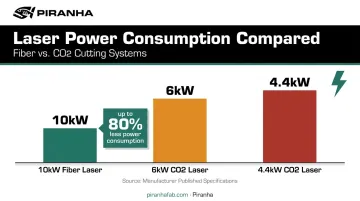
- Fiber lasers use up to 80% less power than comparable CO2 laser systems in manufacturer testing
- Automation-ready design lets shops add loading and unloading later without replacing the base unit
- Total cost of ownership matters more than sticker price when calculating true ROI
What Is a Fiber Laser Cutting Machine?
A fiber laser cutting machine is a CNC-controlled system that uses a solid-state fiber optic laser source to melt or vaporize metal along a programmed path. Instead of a mechanical blade or torch, the cutting happens through concentrated light energy delivered through fiber optic cable.
Here's how the process works: laser diodes pump energy into a specially doped fiber optic cable, amplifying the beam. That amplified beam then travels through mirrors and lenses to a focusing cutting head, where it melts or vaporizes the material along the CNC-programmed path.
Core Components
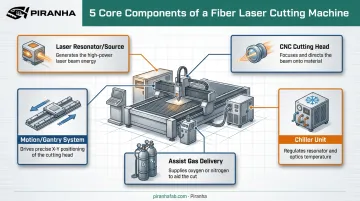
Every fiber laser system relies on a handful of key components working together:
- Laser resonator/source – generates and amplifies the beam
- CNC cutting head – focuses and directs the beam onto the material
- Motion/gantry system – moves the cutting head across the sheet or plate
- Chiller unit – keeps the laser source and optics at stable operating temperature
- Assist gas delivery – oxygen or nitrogen clears molten material from the kerf
Materials and Thickness Capacity
Fiber lasers cut mild steel, stainless steel, aluminum, brass, and copper effectively. Reflective metals like brass and copper need back-reflection protection built into the cutting head.
Thickness capacity scales directly with laser power, according to TRUMPF's published benchmarks. A 4 kW system tops out around 25 mm on mild steel, while a 24 kW machine can push past 60 mm on the same material.
Piranha's own lineup reflects this scaling logic. The SP404 offers 3 kW or 6 kW in a compact 4×4-foot footprint for smaller shops, while the Flex Series ranges from 3 kW up to 20 kW across bed sizes from 5'×10' up to 8'×20' for higher-volume operations.
Matching wattage to your actual material mix, not the highest number on a spec sheet, is the smarter buying strategy.
Common Applications in Metal Fabrication
Fiber lasers show up across a wide range of fabrication work:
- Trailer and truck body panels, frame plates, and gussets
- Structural steel components requiring tight hole and edge tolerances
- Electrical enclosure panels built to NEMA and UL specifications
- Switchgear parts where repeatable dimensional accuracy matters
- Complex profile cutting for high-mix, low-volume production runs
Fiber Laser vs. Other Metal Cutting Methods
Fabrication cutting methods generally fall into three main buckets: laser, plasma, and waterjet. Each has a sweet spot, and picking the wrong one for your job mix is an expensive mistake.
Fiber Laser vs. Plasma Cutting
Fiber laser wins on precision. Typical laser tolerance runs around ±0.005 inches with a kerf near 0.025 inches, compared to plasma's roughly ±0.020-inch tolerance and 0.150-inch kerf, according to a comparison published by The Fabricator. Laser edges also come out squarer, with less top-edge rounding than plasma-cut parts.
Plasma still holds the advantage on thick plate. Hypertherm's own data shows plasma pulling ahead on productivity above roughly 5/8 inch (16 mm), and plasma systems generally cost less upfront. If your shop runs heavy structural plate all day, that crossover point matters.
Fiber Laser vs. CO2 Laser
Fiber technology has largely replaced CO2 lasers for good reason. Fiber delivery eliminates the beam-path mirrors, bellows, and alignment checks that CO2 systems require, cutting maintenance time.
The energy numbers back this up too. Bystronic's manufacturer testing found up to 80% lower power consumption comparing a 10 kW fiber machine against 6 kW and 4.4 kW CO2 units under matched duty-cycle conditions. Fiber also cuts faster on thin-to-mid gauge metal, which covers most sheet metal fabrication work.
Fiber Laser vs. Waterjet Cutting
Waterjet's advantage is thermal: it's a cold-cutting process with zero heat-affected zone, making it the right call for heat-sensitive materials or mixed-material stacks. But that advantage comes at a cost.
| Process | Speed Benchmark | Tolerance | Best-Use Material | Relative Operating Cost |
|---|---|---|---|---|
| Fiber Laser | 30-500 IPM | ±0.005 in. | Thin/mid sheet, reflective metals | ~$4/hour |
| Plasma | 20-200 IPM | ±0.020 in. | Thick conductive plate | ~$15/hour |
| CO2 Laser | Competitive on thicker plate | ±0.005 in. | Existing steel-plate workloads | ~$20/hour |
| Waterjet | Under 1-100 IPM | ±0.005 in. | Heat-sensitive, mixed materials | ~$30/hour |
For pure metal cutting, fiber laser wins on both speed and operating cost. Save waterjet for jobs where heat damage would create rework.
Key Benefits of Fiber Laser Cutting for Metal Fabrication Shops
Beyond raw cutting speed, fiber lasers solve problems that directly hit a shop's bottom line.
Tighter tolerances mean less rework. Spec-driven work like NEMA and UL-compliant enclosures demands repeatable accuracy. When a machine consistently holds tolerance, inspection failures drop and parts don't bounce back to the cutting table.
Clean-edge cuts translate directly into lower labor costs. Minimal kerf and smooth cut edges reduce the deburring and secondary finishing work operators would otherwise handle by hand. That's labor hours redirected to production instead of cleanup.
Production speed shortens lead times. On thin-to-mid gauge material, fiber laser's cutting speed advantage compounds across high-mix production runs, letting shops turn orders faster without adding shifts.
Energy efficiency lowers per-part costs. As covered above, fiber systems can use up to 80% less power than comparable CO2 setups, and that efficiency shows up directly in monthly utility bills.
Automation readiness protects your investment as production needs grow. Piranha's Flex Series fiber lasers come standard with a dual pallet shuttle table, letting operators load new material while the previous sheet is still cutting. Every machine is also built automation-ready:
- AGT Series – full tower storage with automated loading/unloading for multi-shift, lights-out operation
- AG Series – compact automated gantry for shops that stage material on the floor
- LA Series – lift-assist arm as an affordable entry point into automation
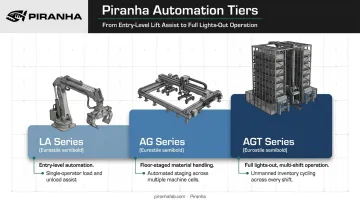
Shops can start with a single-table machine and add automation later without replacing the base unit. That flexibility, combined with labor savings, reduced scrap, and higher parts-per-hour throughput, is what drives faster payback on the initial investment.
How to Choose the Right Fiber Laser Cutting Machine
Picking a fiber laser isn't about buying the biggest number on the spec sheet. It's about matching the machine to what your shop actually runs.
- Match wattage to your material mix: if you're primarily cutting thin-to-mid gauge sheet, a 3kW-6kW system like the SP404 may cover it, while heavier plate work justifies stepping up toward 12kW-20kW territory.
- Size the bed to your parts and volume: Piranha's Flex Series spans 5'×10' up to 8'×20', with single-pallet and dual-pallet shuttle configurations, and higher-volume shops benefit from shuttle tables that keep cutting continuous during load/unload.
- Confirm software fits your team: nesting efficiency and CAD/CAM integration determine how much material you waste and how steep the learning curve is for operators.
- Check automation compatibility now, not later: even if you don't need automated loading today, buying a machine engineered to accept it later saves you from a full equipment replacement down the road.
As a quick reference, here's how wattage typically maps to material thickness:
| Material Type | Recommended Wattage | Example System |
|---|---|---|
| Thin-to-mid gauge sheet | 3kW-6kW | SP404 |
| Mid-to-heavy plate | 8kW-12kW | Mid-range fiber laser |
| Heavy plate production | 12kW-20kW | Heavier-duty fiber laser systems |
Over-buying wattage wastes capital. Under-buying creates bottlenecks the moment production volume grows. Get specific about your actual job mix before locking in a configuration.
Fiber Laser Cutting Machine Cost & ROI
Pricing on fiber laser systems varies widely based on wattage, table size, and automation features. As a reference point, Piranha's SP404 in a 3kW configuration starts at $134,900, with pricing scaling up from there as wattage, bed size, and automation packages are added.
Main cost drivers include:
- Laser source power (higher wattage = higher base price)
- Gantry/motion system quality and build
- Assist gas setup (oxygen vs. nitrogen delivery systems)
- Optional automation packages (lift-assist arm through full tower storage)
Calculating Real ROI
Don't stop at purchase price when evaluating a machine. Payback period is calculated as project cost divided by annual benefit, and that annual benefit should include:
- Labor savings from reduced manual handling and secondary finishing
- Reduced scrap and rework from tighter tolerances
- Faster turnaround enabling more jobs per month
- Lower per-part operating costs versus your current cutting method
For example, a $150,000 laser saving $75,000 annually in labor and scrap reduction pays for itself in two years.
Total Cost of Ownership
ROI calculations capture the immediate payback, but long-term costs matter just as much. Factor in consumables (nozzles, lenses, gas), preventive maintenance schedules, and ongoing energy use over the machine's operating life. A lower sticker price with higher consumable and maintenance costs can end up more expensive over five years than a higher-priced machine built for lower ongoing costs.
Why Piranha for Your Fiber Laser Investment
Choosing a fiber laser is only half the decision. Choosing who you buy it from matters just as much for long-term uptime and support.
One source for the whole fabrication line. Piranha manufactures fiber lasers alongside press brakes, ironworkers, plasma cutters, and shears. That means one quote, one install team, and one parts catalog instead of juggling multiple vendors when something needs service.
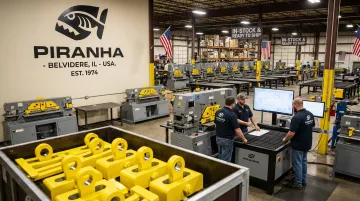
In-stock availability reduces downtime risk. Piranha keeps lasers in stock for faster delivery, and same-day parts shipping runs out of the Belvidere, Illinois facility when you need a component fast.
Real support, not overseas queues. Piranha's phone support at 800-338-5471 connects you directly with U.S.-based staff who understand fabrication and can speak to real-world cutting challenges. That expertise is backed by a heritage stretching back over 140 years, including the W.A. Whitney and Bertsch brands, both known names in metal plate fabrication technology.
That same local support carries through to the buying process. Shops evaluating a fiber laser purchase can use Piranha's "Build and Price Your Perfect Piranha Shop" tool to configure wattage, bed size, and automation options directly. The tool then generates a quote built around their specific production needs.
Frequently Asked Questions
What is a fabrication cutting machine?
A fabrication cutting machine is equipment, such as laser, plasma, waterjet, or mechanical shears, used to shape or separate metal into fabricated parts. Fiber laser has become a leading option for shops needing precision work.
What types of fabrication cutting machines are there?
The main categories are fiber laser, plasma, waterjet, and mechanical shears/saws. Each suits different material types, thicknesses, and tolerance requirements.
How much does a fabrication cutting machine cost?
Cost depends on cutting method, power, and automation features. Plasma systems tend to cost less upfront, while fiber laser setups represent a higher investment with faster payback through precision and speed.
What materials can a fiber laser cutting machine cut?
Fiber lasers cut mild steel, stainless steel, aluminum, brass, and copper. Reflective metals like brass and copper require cutting heads with back-reflection protection built in.
How thick of metal can a fiber laser cut?
Thickness capacity scales with wattage. Lower-power machines handle thin gauge sheet, while high-power industrial systems (12kW-20kW+) cut thick plate exceeding 1.5-2.4 inches (40-60 mm), depending on material.
Is fiber laser cutting better than plasma cutting?
Fiber laser offers superior precision and edge quality on thin-to-mid gauge metal, generally under 3/8 inch. Plasma remains more cost-effective for very thick plate above that range.