The hesitation makes sense. Water tables earn their reputation for cooling parts fast, knocking down fumes, and cutting noise levels dramatically. But aluminum doesn't play by the same rules as steel once it hits water. There's a chemical reaction happening below the surface that most operators never learned about in training.
This article answers the direct question, walks through the hydrogen gas science behind the risk, and lays out exactly how shops safely cut aluminum on a water table when the equipment and process are set up correctly.
Key Takeaways
- Yes, most aluminum alloys can be plasma cut on a water table with proper hydrogen mitigation.
- Aluminum releases free hydrogen gas in water, which can pool dangerously in poor table designs.
- Never cut aluminum-lithium alloys underwater or on a water table.
- Avoid H-35 and H-2 gas mixtures for underwater cutting—check your manual for approved options.
- Downdraft tables eliminate hydrogen risk and suit high-volume aluminum cutting shops.
What Is a Water Table and Why Fabricators Use It
A plasma water table is a tank filled with water, topped with slats or burning bars that support the plate while it's being cut.
Pneumatic valves raise or lower the water level. Most tables run somewhere between 2-3 inches below the plate to 2-3 inches above it, depending on the material and cutting method.
Shops gravitate toward water tables for a handful of practical reasons:
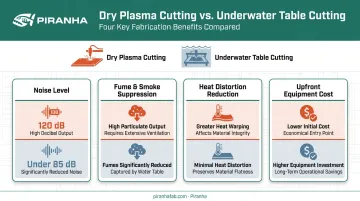
- Fume and smoke suppression: water traps a large percentage of airborne particulate before it becomes a shop-wide problem.
- Noise reduction: dry plasma cutting can hit 120 dB, while underwater cutting drops arc noise by up to 40 dB, often below 85 dB.
- Reduced heat distortion: water pulls heat away from the plate fast, minimizing warping on thinner material.
- Lower upfront cost: water tables are generally cheaper to install than downdraft or fan-based extraction systems.
Water tables work beautifully for steel and stainless steel, where the metal doesn't chemically react with the water beneath it. Aluminum is a different story. It introduces a chemistry problem that steel simply doesn't create, and that's where things get more complicated.
Can You Plasma Cut Aluminum on a Water Table?
Here's the direct answer: yes, most aluminum alloys can be plasma cut on a water table with proper precautions. Those precautions are the entire focus of this article, since skipping them turns a routine cut into a safety risk.
Why Hydrogen Gas Forms
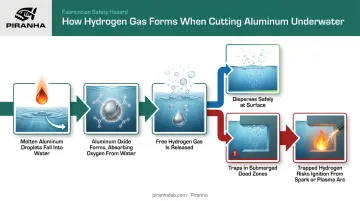
When plasma cuts aluminum, it produces molten aluminum and aluminum oxide particles that drop into the water below. As those particles cool, the aluminum oxide absorbs oxygen from the water, and that reaction leaves free hydrogen gas behind.
In most cases, this hydrogen shows up as tiny bubbles that rise to the surface, pop, and disperse harmlessly into the shop's ambient air. No drama, no risk. The problem starts when the table design gives that gas somewhere to hide.
Where the Risk Actually Lives
Tables with submerged chambers or pneumatic lift mechanisms can trap aluminum particles in places the operator never sees. Over repeated cuts, Hypertherm's guidance on plasma cutting aluminum over water explains that these submerged chambers can develop a hydrogen pocket large enough to ignite if it meets a spark or the plasma arc itself during a later pierce.
ESAB adds a detail that shops often overlook: fine aluminum droplets left in a table don't stop producing hydrogen quickly. According to ESAB's guidance on plasma cutting aluminum on water tables, that debris can keep generating hydrogen bubbles for days, weeks, or even months after the original cut.
No OEM publishes a specific "time to hazard" figure, so there's no universal countdown clock to rely on. That uncertainty is exactly why ongoing vigilance matters more than a one-time check.
Never cut aluminum-lithium alloys underwater or on a water table, under any circumstances. Both Hypertherm and ESAB treat this as a hard prohibition, regardless of table design or safety measures.
Gas Selection Matters Too
Not every shielding gas is safe for underwater aluminum work. Hypertherm's gas selection guidance warns against using H-35 or H-2 mixtures (35% hydrogen, 65% argon) when cutting aluminum underwater, since they add more hydrogen to an already hydrogen-producing environment.
Always check your plasma system's owner's manual for the manufacturer-approved gas and process combinations for your specific machine and material thickness.
How to Safely Cut Aluminum on a Water Table
Cutting aluminum safely on a water table depends on table design, maintenance discipline, and training that goes beyond standard steel-cutting procedures.
Start With the Right Table Design
Not every water table manufacturer has engineered their equipment for aluminum-specific hazards. Work with manufacturers who understand:
- Chamber designs that avoid submerged dead zones where gas pockets can form
- Bottom aeration or agitation systems that keep bubbles moving instead of pooling
- Water-level cycling that breaks up trapped pockets before they accumulate
A well-designed system uses constant, low-volume compressed air through perforated piping to dilute and disperse hydrogen as it forms, rather than letting it collect quietly beneath the plate.
Build a Documented Risk Assessment
Before any aluminum job hits the table, document your process:
- Inspect the table for chamber designs or dead zones where gas could become trapped.
- Confirm gas selection matches manufacturer-approved combinations for your material thickness.
- Verify agitation systems are functioning and not clogged with sediment.
- Train operators specifically on aluminum hydrogen risks , not just general plasma safety.
Maintain the Table Like It's Part of the Safety System
Because it is. Routine maintenance should include:
- Draining and cleaning the table on a regular schedule
- Checking for sediment and fine aluminum particle buildup
- Verifying pneumatic valves cycle correctly so gas doesn't get trapped during water-level adjustments
- Removing plate promptly rather than leaving it sitting on the table for extended periods
Standard steel-cutting maintenance routines won't catch these issues. Aluminum demands its own checklist.
Water Table vs. Downdraft Table for Aluminum
Downdraft tables sidestep the entire hydrogen conversation. Instead of letting molten particulate fall into water, they pull fumes and debris through a filtration system using fans and ductwork. No water, no chemical reaction, no hydrogen to manage.
That makes downdraft systems appealing for shops that cut aluminum frequently or in high volumes, since it removes the variable entirely rather than managing it.
| Factor | Water Table | Downdraft Table |
|---|---|---|
| Hydrogen risk | Requires active mitigation | Eliminated entirely |
| Upfront cost | Lower | Typically 40-60% higher |
| Ongoing costs | Water/sediment maintenance | Filter replacement, power for fans |
| Noise/cooling benefits | Strong | Minimal |
That cost gap is well documented. The Fabricator's analysis of heavy-duty plasma cutting systems notes downdraft systems generally run 40% to 60% more in capital investment than water tables.
Shops also take on ongoing filter replacement and higher power draw, compared to a water table's more modest upkeep.
There's no universal "better" answer here. Hypertherm's own guidance notes that water tables are often preferred for aluminum applications specifically for their sound dampening, dust control, and UV absorption — provided hydrogen is properly controlled. The right choice depends on a few factors:
- Your cutting volume and how often aluminum enters the mix
- Available budget for upfront equipment costs
- How much risk management your team is prepared to own
Choosing the Right Plasma Cutting Equipment for Aluminum Fabrication
Picking a plasma table involves more than choosing between water and downdraft designs. The manufacturer's grasp of aluminum's quirks determines whether you end up with equipment that actually fits your process.
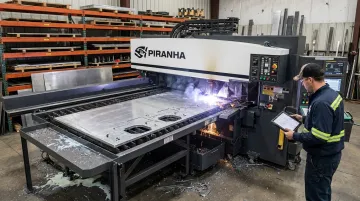
Piranha builds combination punch/plasma and thermal cutting equipment as part of a broader fabrication line designed for shops working across multiple materials, aluminum included. Rather than handing customers a generic spec sheet, Piranha's U.S.-based technical support team works directly with fabricators to evaluate:
- Table design considerations for aluminum cutting applications
- Gas selection appropriate to material thickness and process
- Safety mitigation strategies specific to a shop's production environment
That support doesn't disappear after the sale. Field service engineers provide ongoing troubleshooting by phone and on-site across North America, and select models include installation and operator training.
For shops planning to scale aluminum production, sourcing from a single manufacturer also simplifies things. Parts, service calls, and safety compliance all route through one point of contact instead of multiple vendors for tables, torches, and consumables.
Frequently Asked Questions
Do you need a water table for a plasma cutter?
No. Plasma cutters run just as well on downdraft tables or dry-cut setups with proper ventilation. The right choice depends on the materials you cut, your budget, and your shop's environment.
Can you plasma cut aluminum on a water table?
Yes, you can safely cut most aluminum alloys on a properly designed water table with hydrogen mitigation measures in place. Aluminum-lithium alloys are the one strict exception.
Can you cut aluminum-lithium alloy on a water table?
No. Never cut aluminum-lithium alloys underwater or on a water table, due to a heightened risk of dangerous reactions with water.
What gas should I use to plasma cut aluminum?
Nitrogen or air are common plasma and shield gas choices for aluminum. Avoid H-35 and H-2 mixtures specifically for underwater cutting, and always follow your equipment's cut charts.
Is a downdraft table better than a water table for cutting aluminum?
Downdraft tables remove the hydrogen accumulation risk entirely, making them attractive for frequent aluminum cutting. They typically cost more upfront than water tables, though.
How do you prevent hydrogen gas buildup when cutting aluminum underwater?
Use tables engineered with water agitation, avoid chamber designs that trap gas, and partner with an experienced table manufacturer. Pair that with a documented risk assessment before every aluminum job.