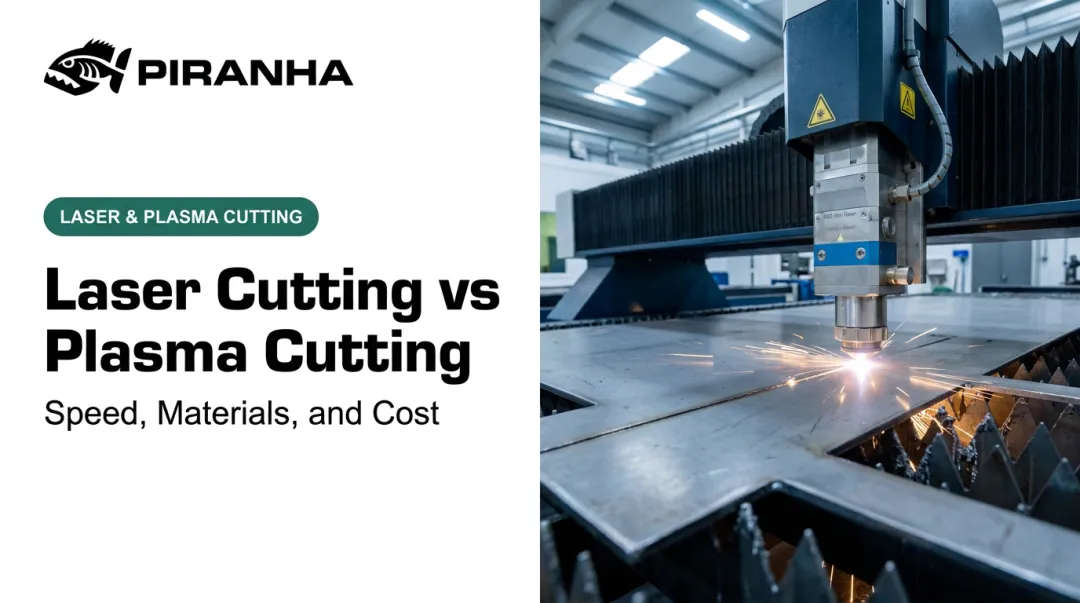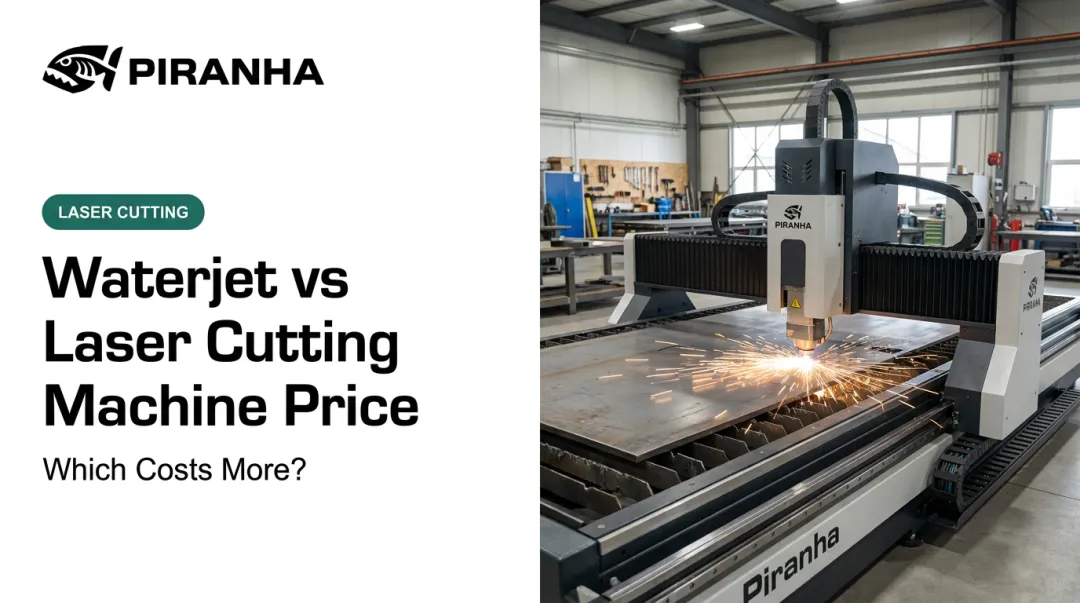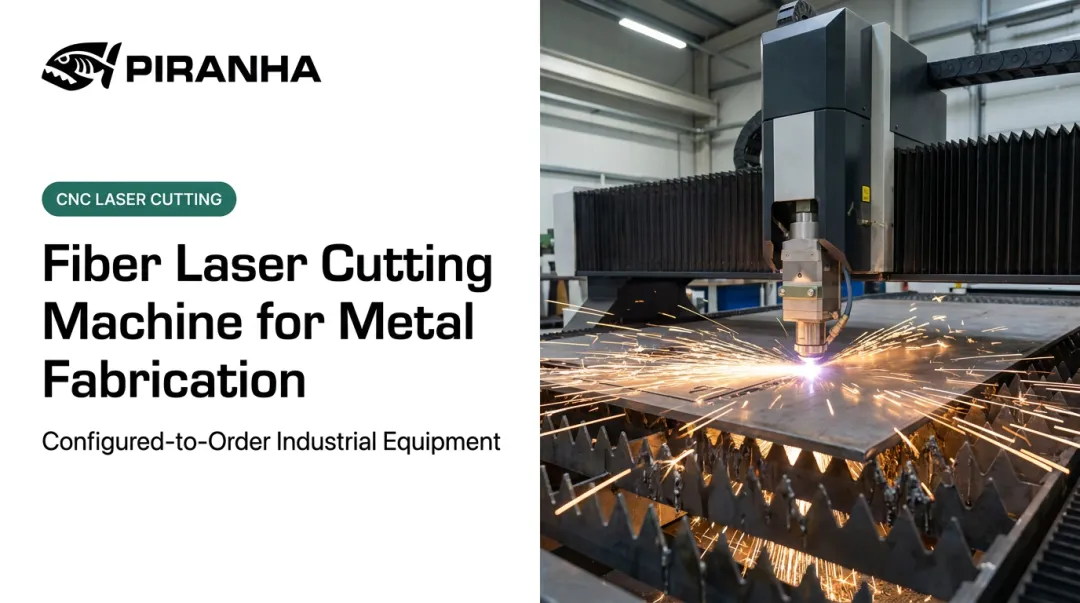
Nitrogen delivers the cleanest, most consistent cut edge available. But it costs more to run than oxygen or compressed air. Fabricators need to weigh that superior finish against real gas consumption numbers before switching assist gases on the shop floor.
This article breaks down how nitrogen laser cutting actually works, where it earns its keep, and what it really costs to run — so you can decide whether it fits your production mix.
Key Takeaways
- Nitrogen cutting produces oxide-free edges ready for welding and painting immediately
- Best suited for stainless steel, aluminum, and thin mild steel where finish quality matters most
- On-site nitrogen generation lowers long-term costs despite higher upfront investment
- Your laser platform matters: efficient nitrogen-assist cutting directly affects quality and cost
What Is Nitrogen Laser Cutting?
Nitrogen laser cutting uses inert nitrogen gas, instead of oxygen or compressed air, as the assist gas that clears molten metal from the kerf during cutting. The laser does all the melting; nitrogen just handles the cleanup.
That inertness is the whole point. Unlike oxygen, nitrogen doesn't chemically react with the molten metal. No reaction means no oxidation, no discoloration, and no flaky dross clinging to your cut edge.
There's a secondary benefit too: nitrogen cools the cut zone as it works. On thinner sheet metal especially, that cooling effect helps limit warping and heat distortion, a real problem when oxygen's exothermic reaction pumps extra heat into the part.
How the Nitrogen Assist Gas Process Works
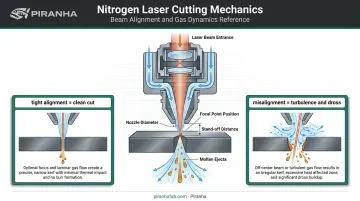
The mechanics are straightforward. The laser beam melts a narrow path through the material while a coaxial nitrogen jet blasts through the nozzle, ejecting molten metal out the bottom of the kerf.
Two variables control how well this works: nozzle diameter, which determines how tightly the gas stream focuses on the cut zone, and focal position, where the beam's focal point sits relative to the material surface.
Get either one wrong, and you're asking for trouble. Tight nozzle alignment and a short stand-off distance from the workpiece keep the gas jet stable. Loose alignment or too much distance introduces turbulence, which shows up as uneven dross along your cut edge, exactly what nitrogen is supposed to prevent.
Gas Purity, Pressure, and Flow Rate That Matter
Purity requirements shift depending on the job. Thin-gauge mild steel can often run on 99.90% nitrogen, while 99.99% purity is a fairly standard benchmark for clean cuts on thicker stainless. Some cutting-head purge systems call for 99.999% purity. Lower purity means more residual oxygen in the mix, and that translates directly to discoloration and dross on the finished edge.
Pressure follows a similar logic. High-pressure nitrogen-assist cutting commonly runs 300 to 400 PSI at the laser inlet, with storage systems maintained 75 to 100 PSI above that to keep supply consistent, according to The Fabricator's gas-delivery analysis. Thicker plate demands more pressure and higher flow, simply because there's more molten material to clear out of the kerf.
One caveat: exact settings vary by laser wattage, nozzle size, and material. Always start from your machine manufacturer's OEM cut charts rather than a generic number pulled from another shop's setup.
What Are the Advantages of Nitrogen Laser Cutting?
The case for nitrogen comes down to what happens after the cut. Here's what shops typically gain:
- Minimal post-processing: parts come off the machine ready for the next step
- Bright, oxide-free edges with no flaky dross to knock off
- Improved corrosion resistance compared to oxide-contaminated oxygen-cut edges
- Better paint and coating adhesion, since there's no oxide layer interfering with bond strength
Nitrogen also cuts a narrower kerf than oxygen, which translates to sharper detail on intricate parts. That precision matters a lot for electrical enclosure and switchgear fabrication, where tight tolerances and clean vent slots are non-negotiable.
Gas costs run higher with nitrogen, but the productivity trade-off usually still favors it. When a part skips deburring, grinding, or media blasting entirely, shops often come out ahead on total labor and throughput per part.
Oxygen-cut oxide frequently needs removal before welding or coating. That's an extra operation nitrogen eliminates outright, based on The Fabricator's finishing research.
There's a consistency angle too. Long production runs demand repeatable hole positioning and clean edges, particularly for OEM parts that need to meet enclosure specs like NEMA and UL corrosion protection standards. Nitrogen doesn't guarantee compliance on its own, but a clean, oxide-free edge going into your coating and testing process makes hitting those specs a lot more reliable.
Where Nitrogen Cutting Delivers the Most Value
Nitrogen's finish quality pays off most in industries where a clean edge saves real downstream cost:
- Aerospace components requiring tight tolerances
- Automotive body panels, especially safety-critical formed parts
- Electronics enclosures where fit and finish matter
- Medical device components
- Trailer and truck body panels
- Electrical enclosure and switchgear production
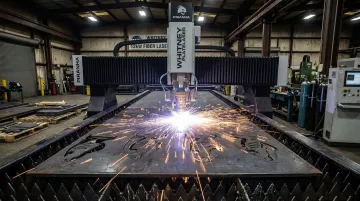
Trailer manufacturing is a good example of where this plays out. Piranha's Whitney PlateLASER platform, a 12kW fiber laser system, cuts steel plate up to 5/8 inch thick with nitrogen while running up to three times faster than a 6kW system. For components like upper coupler plates and under-ride guard brackets, the oxide-free edge removes a cleaning step that would otherwise sit between cutting and welding.
Which Materials Are Best Suited for Nitrogen Cutting?
Not every material benefits equally. Here's how nitrogen performs across the metals most shops actually cut:
Stainless steel is nitrogen's best use case. It keeps edges shiny and free of the oxide discoloration that ruins stainless's appearance and corrosion resistance. Consistent results usually require higher purity nitrogen (99.99% or better) and adequate pressure to clear molten material cleanly.
Mild steel is where it gets situational. Can you laser cut mild steel with nitrogen? Yes, but it's mainly a thickness question. Nitrogen works well on thinner gauges, roughly under 1/8 inch, where edge quality is the priority.
Once you're into thicker sections, oxygen's exothermic reaction makes it the faster, more economical choice. Mazak's published cutting data for a 6kW fiber laser includes nitrogen-cut examples at 0.180-inch mild steel, 0.250-inch stainless, and 0.250-inch aluminum, a useful reference point for where nitrogen still performs well.
Aluminum and non-ferrous metals (brass, copper) benefit from nitrogen because these materials are reflective and conduct heat quickly, which makes oxidation and burr formation more likely without an inert assist gas. Nitrogen keeps the cut clean without adding thermal stress.
What Drives the Cost of Nitrogen Laser Cutting?
Let's talk numbers. Nitrogen costs more per hour of cutting than oxygen. That's not up for debate. The gap widens on thicker material, since more pressure and flow are needed to clear the kerf.
Several factors stack up to determine your real cost per part:
- Gas consumption rate, tied directly to purity, pressure, and nozzle size
- Material thickness, which drives flow requirements up fast
- Supply method: cylinders, liquid nitrogen delivery, or on-site generation
- Post-processing avoided, which offsets the higher gas spend
On-Site Nitrogen Generation vs. Delivered Gas
This is the decision most shops eventually face once nitrogen volume climbs. PSA (pressure swing adsorption) and membrane generators produce nitrogen on-site, cutting out delivery trucks and cylinder swaps entirely.
| Factor | On-Site Generation | Delivered Gas (Cylinder/Liquid) |
|---|---|---|
| Upfront cost | Higher (equipment purchase) | Lower (no capital investment) |
| Ongoing cost | Predictable (electricity + maintenance) | Variable (delivery pricing, fuel surcharges) |
| Supply risk | Low, generated on demand | Dependent on delivery schedules |
| Scalability | Fixed capacity, upgradeable | Flexible with contract adjustments |
AMADA Canada reports that in-house nitrogen generation can deliver ROI in under 24 months for shops running enough volume to justify the equipment. That's a supplier benchmark, not a universal guarantee — your breakeven depends on how many hours per week you're actually cutting with nitrogen.
The reliability angle matters just as much as cost. Delivered gas ties your production schedule to someone else's truck. Run out mid-shift and cutting stops.
On-site generation removes that dependency. That's exactly why Piranha designs its fiber laser systems, including the Piranha-Whitney PlateLASER, with efficient nitrogen-assist cutting in mind. A proprietary gas system built into the 12kW platform reduces nitrogen consumption on thick plate, helping control per-part costs as production scales without forcing constant cylinder turnover.
Nitrogen vs. Oxygen vs. Compressed Air: Which Should You Use?
There's no universal "best" gas. Each one trades speed, cost, and finish quality differently.
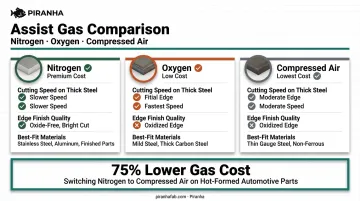
Nitrogen vs. oxygen comes down to quality versus speed. Oxygen is cheaper and faster on thick mild steel because its exothermic reaction adds cutting heat. The trade-off: oxygen leaves a wide kerf and flaky oxide that often needs removal before welding or coating. Nitrogen skips that step but costs more in gas volume, especially at higher pressures.
Nitrogen vs. compressed air is a budget conversation. Air is roughly 78% nitrogen and 21% oxygen, so it leaves some oxidation, usually less flaky than pure oxygen cutting but not oxide-free. It's a solid fit for parts that don't need a pristine edge.
TRUMPF's automotive testing found that switching from nitrogen to a compressed-air process cut gas cost by 75% on hot-formed body components, with total part cost dropping up to 20%. That's a meaningful number for high-volume runs where finish tolerance allows it.
Mixed-gas approaches are also gaining traction. A 95% nitrogen/5% oxygen blend can reduce dross and nitrogen consumption on mild steel while sacrificing a fully oxide-free edge — a middle ground worth testing if your parts don't demand perfection.
How to decide:
- Check your material mix: stainless and aluminum lean nitrogen; thick mild steel leans oxygen
- Review part specs: welding, painting, or coating downstream favors an oxide-free edge
- Calculate your volume: high-throughput shops benefit most from on-site nitrogen generation
- Test before committing: run a sample batch on your actual parts, not a generic material chart
Frequently Asked Questions
Can you laser cut mild steel with nitrogen?
Nitrogen works well on mild steel, especially on thinner gauges under about 1/8 inch where edge quality matters most. On thicker mild steel sections, oxygen remains faster and more economical due to its exothermic cutting assist.
What is the best gas for laser cutting?
There's no single best gas — it depends on your priorities. Nitrogen wins on finish quality, oxygen wins on speed and cost for thick steel, and compressed air offers a budget-friendly middle ground.
Is nitrogen laser cutting more expensive than oxygen cutting?
Yes, nitrogen typically costs more per hour in gas consumption, particularly on thicker material requiring higher pressure. That extra cost is often offset by reduced deburring and finishing labor.
What purity of nitrogen is needed for laser cutting?
Most shops run 99.9% to 99.99% purity, with some cutting-head purge systems requiring 99.999%. Lower purity increases the risk of discoloration and dross on the finished edge.
Can you generate nitrogen on-site for laser cutting?
On-site generation works well: PSA or membrane nitrogen generators produce gas locally, cutting dependence on delivered cylinders or liquid nitrogen. Many shops see ROI within roughly two years, depending on cutting volume.
Does nitrogen cutting eliminate the need for deburring?
For most parts, nitrogen greatly reduces or eliminates deburring and grinding. Results still depend on material type, thickness, and how well the machine's gas pressure and nozzle settings are tuned.