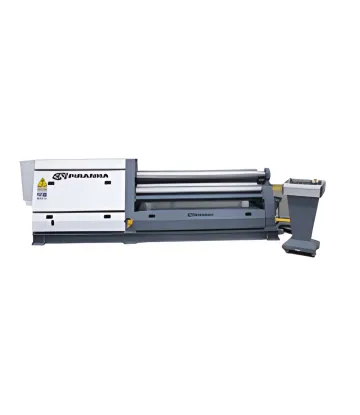
What does a ring roller do?
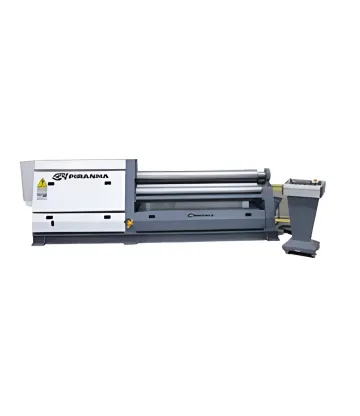
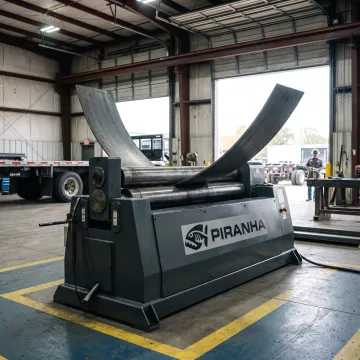
A ring roller (also called a plate roller or section bending machine) bends flat metal plate, structural profiles, pipe, and tube into cylindrical shapes, rings, and curved profiles. The machine uses a series of rollers—typically three or four—to progressively bend the material by passing it through multiple times. Ring rollers can form everything from small diameter rings to large pressure vessels and structural components, handling materials including angle iron, flat bar, square bar, tee sections, channel, beam, and pipe up to 2" Schedule 80. They're essential equipment in metal fabrication shops producing tanks, enclosures, structural steel components, and custom curved metalwork.
How much does a roller machine cost?
Ring roller pricing varies significantly based on capacity, configuration, and features. Entry-level plate rollers designed for lighter duty-cycle work typically start in the lower price range, while heavy-duty hydraulic angle rolls and autonomous plate bending systems with advanced controls command premium pricing. Four-roll machines generally cost more than three-roll configurations due to their enhanced precision and pre-bending capabilities. Factors affecting cost include maximum plate thickness capacity, roll width, hydraulic versus mechanical drive systems, digital readouts, and automation features. For accurate pricing tailored to your specific bending requirements and production volume, contact Piranha directly at 800-338-5471 for a custom quote.
What does a rolling machine do for you?
A rolling machine eliminates the time-consuming manual process of forming curved metal components, dramatically increasing productivity and precision in your fabrication shop. Instead of piecing together segmented curves or outsourcing bend work, you gain in-house capability to produce cylinders, rings, and curved profiles on demand—reducing lead times and controlling quality. Ring rollers deliver repeatable, consistent bends that meet engineering specifications, minimize material waste through accurate first-pass forming, and expand your shop's capabilities to take on vessel fabrication, structural steel work, and custom curved components. The investment typically pays for itself through labor savings, faster turnaround times, and the ability to win jobs requiring curved metalwork.
What's the difference between 3-roll and 4-roll plate rollers?
Three-roll plate rollers use two bottom rolls and one adjustable top roll, requiring manual pre-bending of plate edges before rolling to prevent flat spots. Four-roll machines feature an additional pinch roll that automatically pre-bends edges, eliminating manual work and delivering superior cylindrical accuracy with less operator skill required. Four-roll designs also allow for asymmetrical bending and cone rolling. While 3-roll machines have lower upfront costs and simpler mechanics, 4-roll systems significantly reduce setup time, improve precision, and are preferred for high-volume production or applications demanding tight tolerances. Piranha offers both configurations to match your budget and production requirements.
Can ring rollers handle structural shapes beyond flat plate?
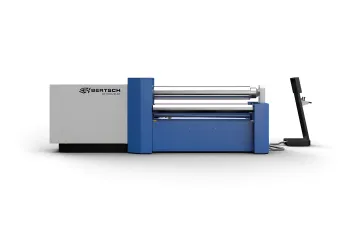
Yes, specialized ring rollers designed for section bending can roll a wide variety of structural profiles including angle iron, flat bar, square bar, tee sections, channel, I-beams, and pipe. Bertsch Hydraulic Angle Rolls, for example, can roll structural profiles and pipe up to 2" Schedule 80 at 28" diameter. These machines use specially configured rollers and increased capacity to handle the complexity of bending profiles the hard way (on edge) or the easy way (flat). This capability is essential for structural steel fabrication, architectural metalwork, and custom railings. When specifying a ring roller, clearly identify whether you need plate-only capacity or structural section bending capability.
What materials can be formed with a ring roller?
Ring rollers can form virtually any ductile metal including mild steel, stainless steel, aluminum, copper, and specialized alloys. Material thickness capacity ranges from thin gauge sheet metal to heavy plate several inches thick, depending on machine specifications and material yield strength. Harder materials or higher-strength alloys require greater machine capacity and may limit minimum bend radius. The key consideration is matching the machine's tonnage rating to your material type and thickness—a plate roller rated for 1/4" mild steel will have reduced capacity when rolling stainless steel or high-strength alloys. Piranha's technical team can help you specify the right capacity for your material requirements.
Do you offer installation and training for ring rollers?
Yes, Piranha provides comprehensive installation support and operator training as part of our turnkey equipment solutions. Our experienced technicians handle rigging, positioning, leveling, and full commissioning of your ring roller to ensure optimal performance from day one. Operator training covers machine controls, safety procedures, proper setup for different materials and bend radii, troubleshooting, and maintenance best practices. We also offer ongoing technical support via phone at 800-338-5471, with U.S.-based fabrication experts available to answer questions about specific bending applications. Preventive maintenance programs and same-day parts shipping from our Belvidere, IL facility ensure long-term productivity and minimize downtime.